
[Nanao] Day Walk | Recovery After the Noto Earthquake
Watch this walk
 Watch on YouTube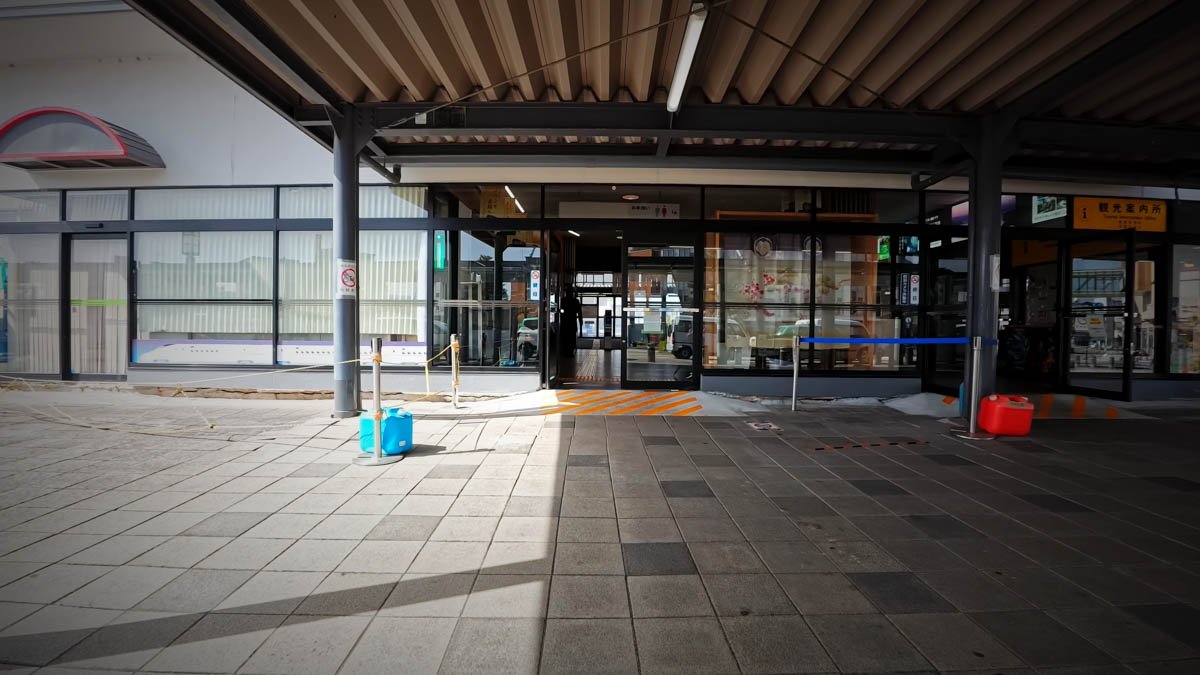
Visited: April 26, 2024 (Friday)
This stop came while filming my way from the Kansai region up into Hokuriku, moving from Himi in Toyama Prefecture into Nanao, Ishikawa. About four months had passed since the Noto Peninsula earthquake struck in January 2024, and I wanted to record what the area around Nanao Station looked like at that point.
Roadside Station Noto Shokusai Ichiba, a local market just under a kilometer on foot from the station, was apparently reopening in time for Golden Week. On this particular day, though, it was closed for preparations.
Around the Station
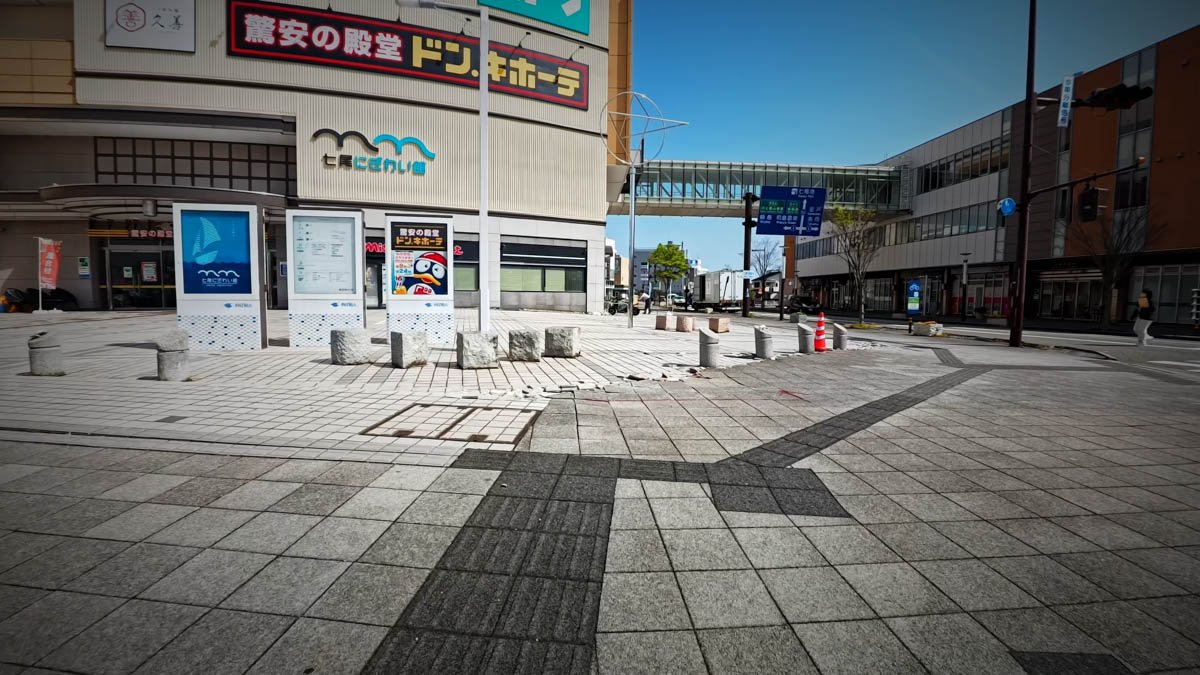
Stepping outside the station, the paving stones of the plaza were cracked, with sections sunken in. Aside from the occasional passerby, there were almost no people around — let alone tourists.
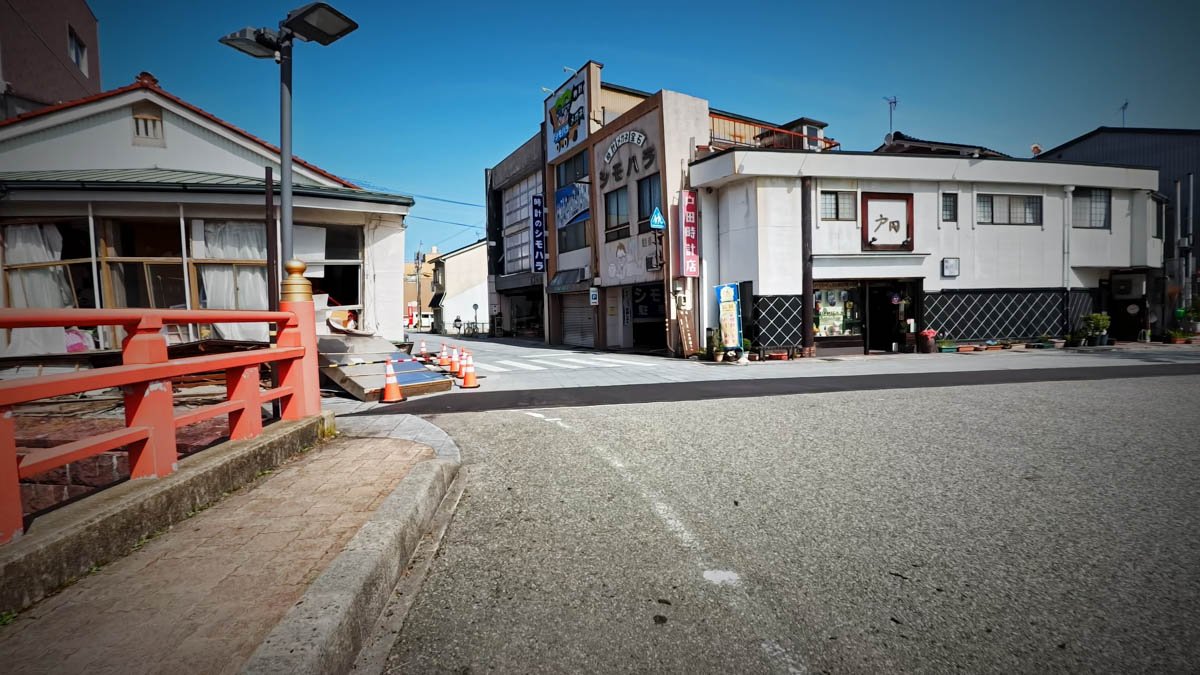
Collapsed buildings turn up here and there throughout the area. I've walked through a number of towns hit by earthquakes before, and even here in Noto, it was the tile-roofed buildings that seemed to have collapsed most often.
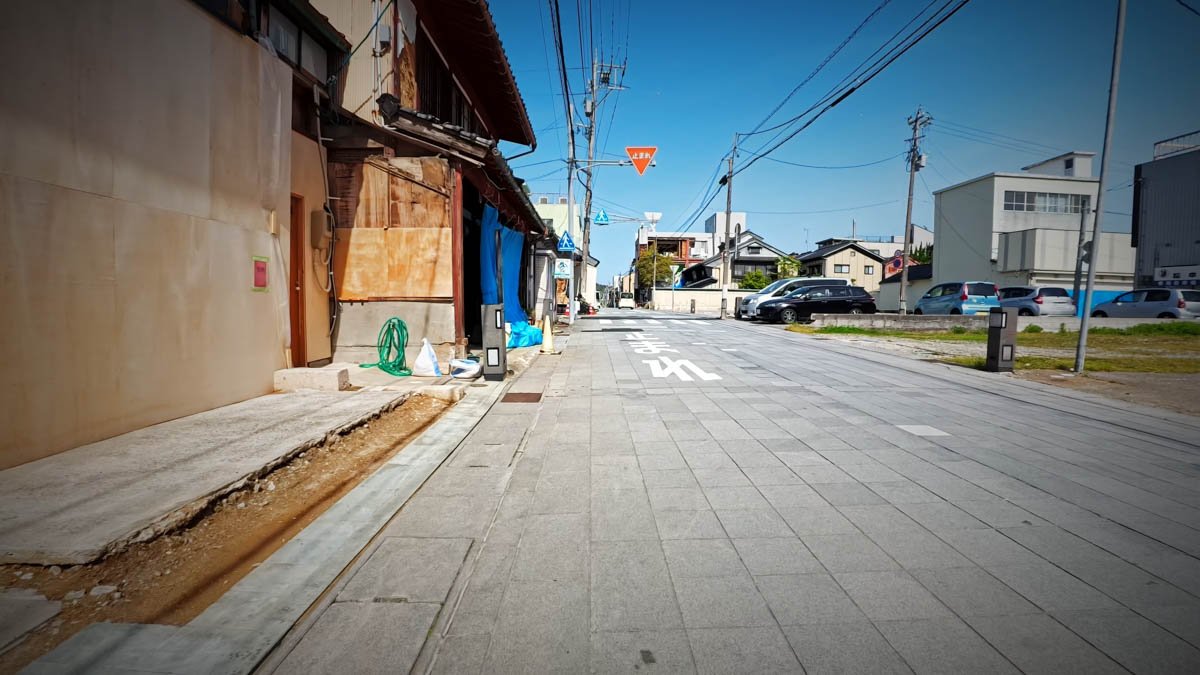
Around Nanao Station, the roads no longer seem to be blocked by rubble. A leaning utility pole nearby was a reminder of just how strong the shaking had been in this part of town.
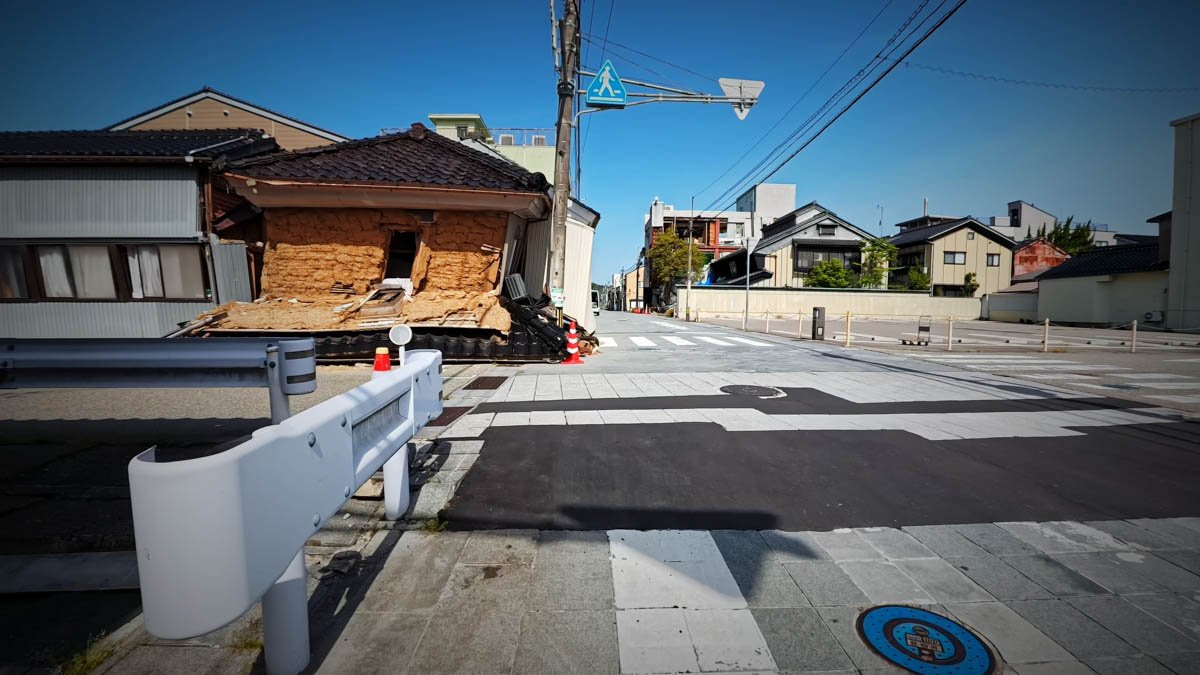
A building had collapsed entirely. Seeing the mud wall stripped bare like that, I couldn't help wondering whether everyone inside had made it out safely.
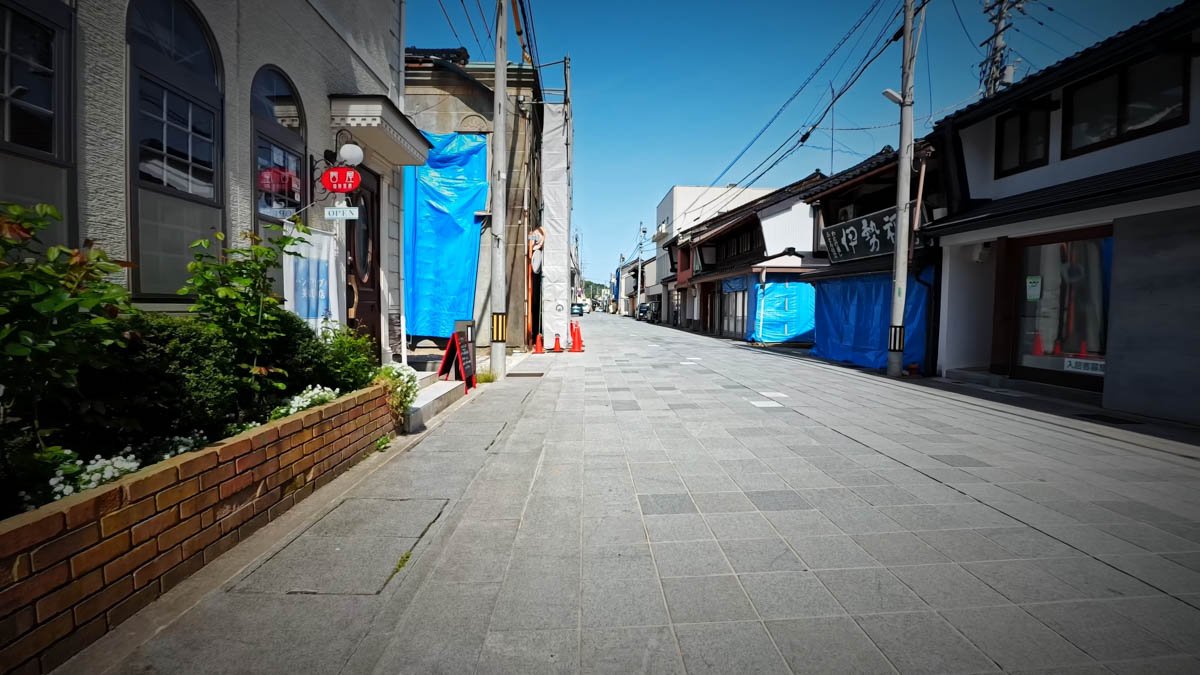
This is the Uchiura Kaido, a road that developed from the Edo period onward as a key route connecting Kanazawa with Oku-Noto. Handsome old buildings line the street, but the earthquake damage here is hard to miss.
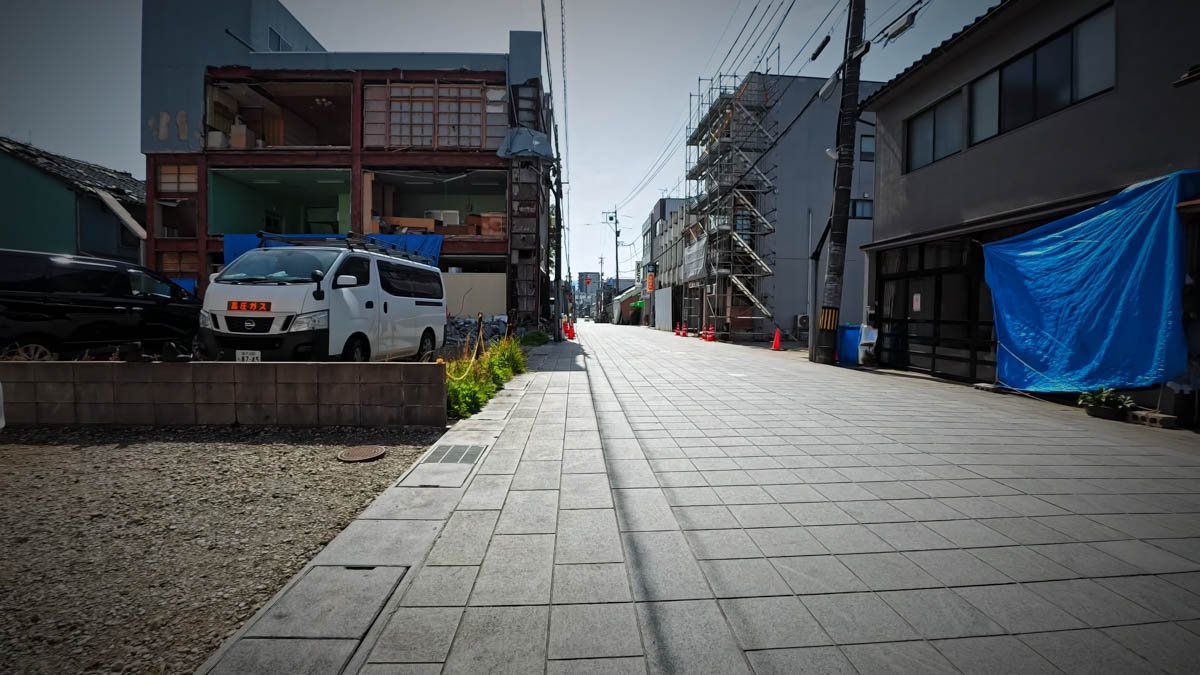
One house had lost its outer wall entirely, leaving the interior exposed to the street. Scaffolding had gone up around it, and repair work was underway.
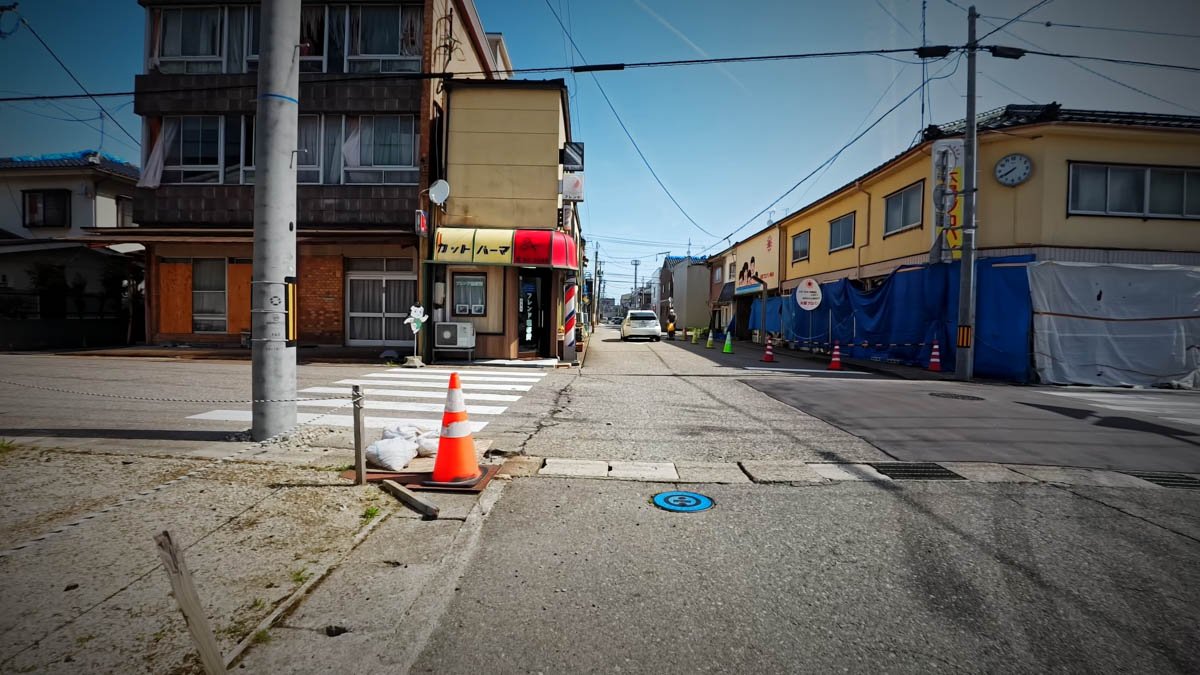
The road surface here had cracks and a slight unevenness to it.
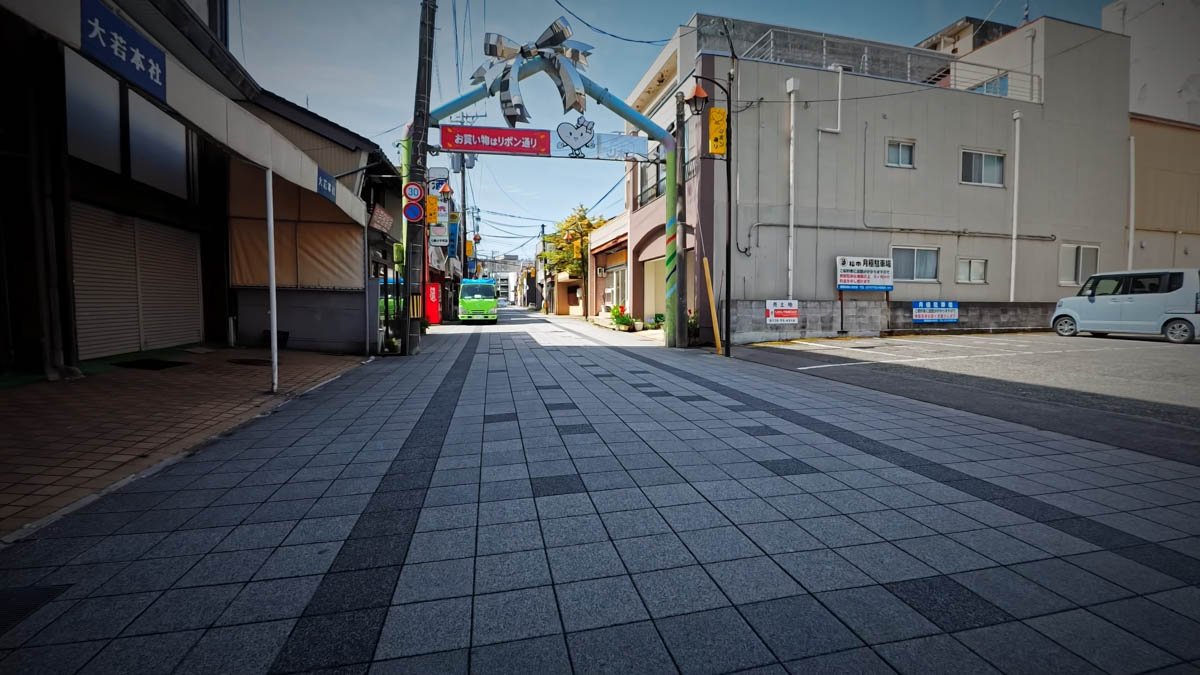
Ribbon Street runs beneath an arch bearing its name. A few shops had reopened, but far more stood shuttered.
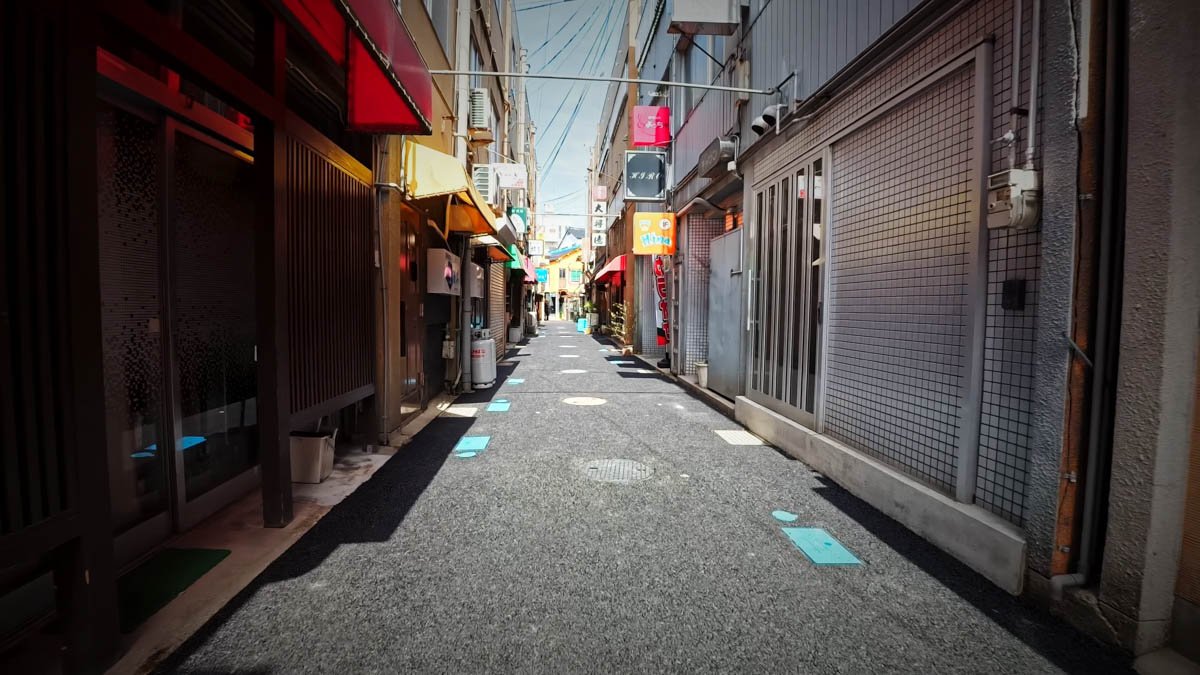
Behind the shopping street is a narrow alley lined with tempura and soba restaurants and other small eateries clustered together.
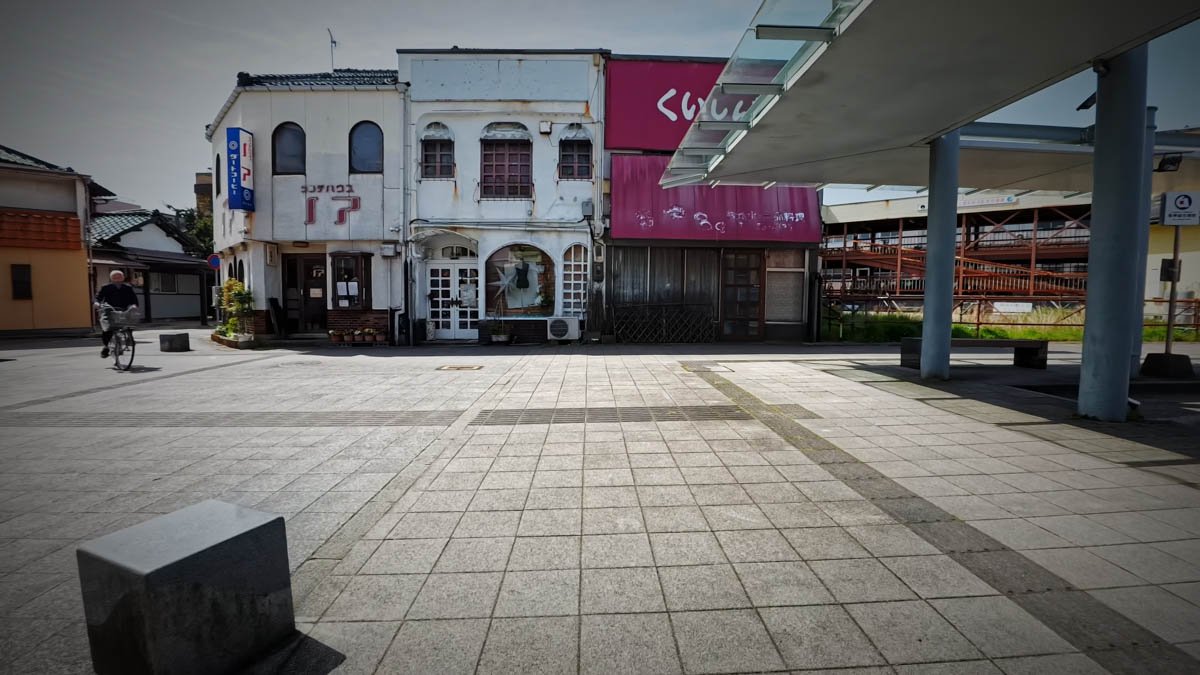
I made my way back to the station plaza. The mood suggested that recovery here still had a long way to go — starting with the removal of collapsed buildings, much of which appeared untouched, whether from a shortage of contractors or of labor.
Some restaurants were open, though, and the town as a whole seemed to be slowly welcoming visitors back. I'd like to keep returning to Nanao and keep documenting how it changes over time.
Video: Walking Around Nanao Station

I hope you'll enjoy this video alongside the post. Consider subscribing to The Street Archive | MACHIDORI YouTube channel.
See this place on the map
Open the filming spot on the archive map and explore nearby streets.
Open map![[June 2026] Trip Plan | Hokuriku and San’in Loop to Kobe](/images/2026/06/09/1/route-planner.png)
Watch The Street Archive | MACHIDORI on YouTube